
An F&B operator's job is complicated enough without discovering on day one of fit-out that the building wasn't designed for a restaurant. Before you lease or buy restaurant space in Noida, walk the site with a specialist MEP consultant and confirm the following.
The kitchen-ready MEP checklist
Exhaust
Every hot kitchen needs a dedicated vertical exhaust stack that terminates above roof level — no horizontal dog-legs that collect grease. Confirm the stack is provisioned for your unit, not shared across a floor.
Gas
Piped gas from a centralised reservoir is the modern standard. LPG bank rooms on ground floor are acceptable but logistically painful. Ask for a gas-line connection diagram for your unit before booking.
Power
A typical 1,000-sqft restaurant needs 25-35 KVA. Confirm allocated load per unit and whether DG back-up is part of the building service. Serious 2026 campuses offer 100% DG on essential circuits.
Water & drainage
Sealed wet-zone flooring and a grease trap routed to a building-level intercept are table stakes. If the building's sewage plan does not include a grease-trap service line, walk away.
The Flagship — restaurant-grade MEP benchmarks
- Location
- Crosswalk hi-street · ground level
- Power
- 25-35 KVA, 100% DG essential
- Gas
- Piped from central reservoir
- Drainage
- Building-level grease trap intercept
- Hotel footfall
- Hyatt House · 127 extended-stay keys
- Office catchment
- 15,000+ within 2 km
Footfall density beats amenity marketing
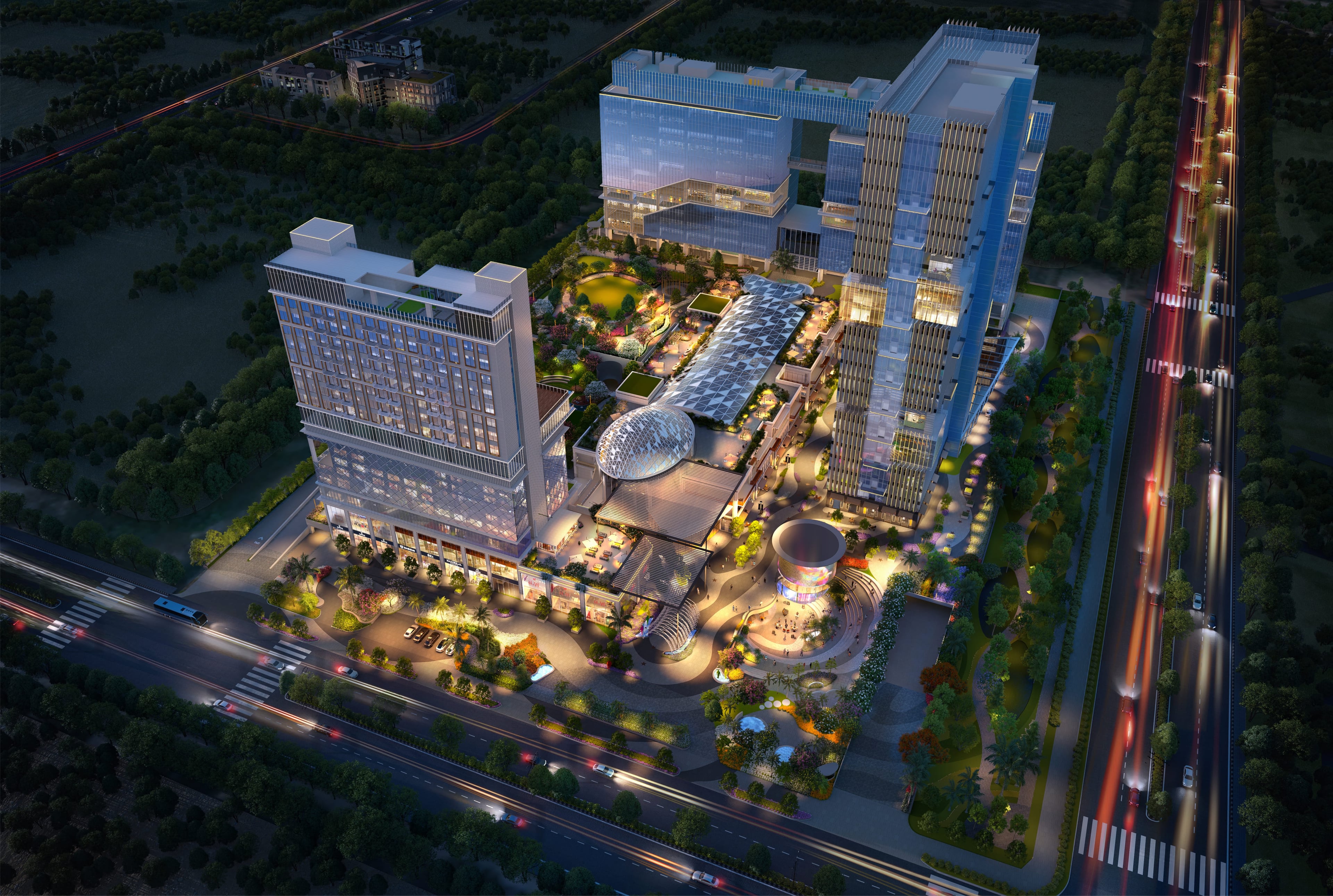
At CRC The Flagship, restaurant space sits on the Crosswalk hi-street with kitchen MEP designed in from day one — plus captive Hyatt House guest footfall and 15,000+ office-goers within 2 km. For operators, that footfall density matters more than any amenity brochure.
FSSAI, fire and municipal compliance — the other checklist
Even a perfectly specced kitchen will not open if the building-level compliance is not in place. Before signing the agreement, ask for three documents: the building occupancy certificate (OC) issued by Noida Authority, the fire NOC covering commercial F&B usage, and the building's approval for centralised grease-trap and effluent management. FSSAI licence itself is unit-level and your responsibility, but FSSAI inspectors look at shared building infrastructure — grease trap routing, water quality, pest-control contracts — during premises inspection. A building that has not been designed for F&B from the start creates compliance friction that costs months.
Operator economics — what the unit needs to deliver
Before any MEP conversation, work backward from the unit economics. A casual-dining restaurant in a Sector 140A Grade-A campus typically needs ₹400–600 average per-cover, 2.5–3.5 table turns at lunch and again at dinner, and ~40–50% gross margin on food and beverage to sustain Grade-A rentals. Fine-dining formats target higher per-cover (₹1,200–2,500) with lower turns (1.5–2 at dinner). Café formats run on volume — ₹200–400 per head, 8–10 turns a day. Work these numbers against your floor plate and expected rent before fitting out. The building is a platform; the P&L is yours.
Hotel-adjacent F&B — the extended-stay opportunity
On a campus anchored by an extended-stay hotel like Hyatt House, F&B operators get a guest profile that traditional transient hotels do not offer. Extended-stay guests — corporate relocations, project-based deployments, international expatriates on 3-month-plus assignments — cook less often than they eat out, and they eat out within walking distance. The captive demand is steady, repeatable, and premium-priced. Smart operators on hotel-anchored campuses build their menus and service formats explicitly around this guest — breakfast formats, quick lunch options, family-friendly dinner — rather than chasing the same crowd that a standalone high-street restaurant would.
See restaurant space at The Flagship
Crosswalk hi-street units, kitchen MEP specifications and current lease terms.