
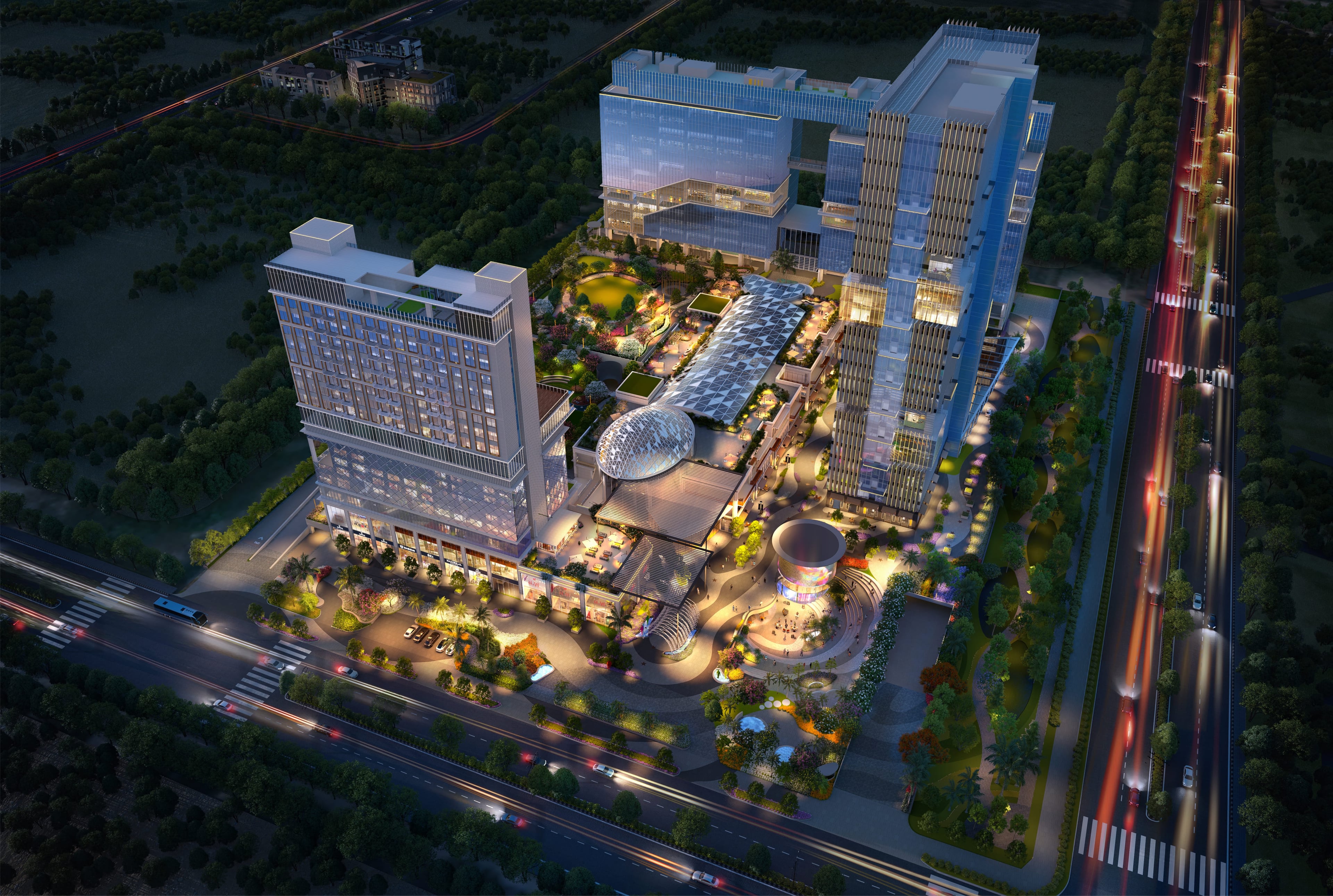
Most commercial real estate ROI calculations are wrong because they confuse nominal rent with net yield, and they ignore the capital outlay ramp from the payment plan. Here is a cleaner framework — worked through with current CRC The Flagship numbers.
The three mistakes that make most ROI math wrong
Three mistakes dominate commercial real estate ROI calculations — and each of them inflates the apparent return by 1–3 percentage points. Mistake one: using the headline price instead of the all-in cost. Stamp duty, GST, registration and a buffer for legal fees typically add 10–12% on top of the headline price. Using the headline inflates yield. Mistake two: treating guaranteed rent as net rent. A genuine net-yield calculation subtracts maintenance (zero at The Flagship; not zero on most other projects), property tax, insurance, and any gap-period risk. Mistake three: ignoring the IRR of the payment plan. A 40:60 plan means 40% of capital is deployed at booking and 60% later — the time value of that 60% matters. A correct IRR weights capital outflows against rental inflows over the full horizon, not a simplistic gross-yield number.
The six-step framework
Step 1 — The ticket
Super area × rate. For a 700-sqft Individual Shop at The Flagship, starting price is ₹1.78 Cr. Add ~10% for GST, registration and stamp duty → true all-in cost ≈ ₹1.96 Cr.
Step 2 — Annual rent
Guaranteed lease ₹200/sqft/month × 700 sqft × 12 = ₹16.8 Lakhs per year. At The Flagship, this begins from possession day — not six months after you find a tenant.
Step 3 — Gross yield
₹16.8 L ÷ ₹1.96 Cr ≈ 8.6%. Top of the Noida Grade-A commercial range (typically 6-8%) for projects without a structured lease guarantee.
Step 4 — Net yield
Zero-maintenance-cost campus → net ≈ gross. Typical commercial project where the owner pays maintenance → subtract 1-2 percentage points.
Step 5 — Stress test
What if the guarantee lapses at year 8? Check organic market rent. If guaranteed rent is only 10-20% above market, safe. 50% above market = premium may not survive expiry.
Step 6 — Total return
Over the 27-year lease: ₹16.8 L × 27 = ₹4.54 Cr rent on a ₹1.96 Cr investment — ~2.3× on rental alone, before capital appreciation.
Worked example — 700-sqft Individual Shop
- Price
- ₹1.78 Cr headline · ₹1.96 Cr all-in
- Rent/year
- ₹16.8 L
- Gross yield
- ~8.6%
- Net yield
- ~8.6% (zero maintenance)
- 27-year rent total
- ~₹4.54 Cr
- Rental return
- ~2.3× capital
Capital appreciation — the layer the rent tables ignore
Grade-A commercial in active NCR sub-markets has historically appreciated 6–10% per year during the early operational phase of an anchor campus. That number compounds against the rental return to produce the actual investor outcome. On a 700-sqft unit bought at ₹1.96 Cr all-in, even a conservative 5% CAGR over 10 years produces a residual capital value of ~₹3.2 Cr — before considering the reset of a 27-year lease at higher market rents, or the tax-shielded compounding of reinvested rental income. The right way to think about commercial real estate is as a two-engine asset: rent pays the coupon, capital appreciation pays the principal gain.
The honest risk register
No asset class is risk-free. The honest risk register for Grade-A Noida commercial includes: market rent moving below guarantee by year 10–15 (compresses IRR at renewal); interest rate shocks affecting financing costs if you are leveraged; macro demand shocks (pandemic-era office vacancy; retail softness in recessions); and construction delays if you buy pre-possession rather than completed. The best hedges against these are: buying near possession or post-completion, keeping leverage under 50% LTV, diversifying across format rather than doubling down on one unit type, and verifying the guarantee's legal capture in the sale deed before signing.
Exit strategy — how you plan to sell matters now
A sophisticated buyer plans the exit before the entry. Three exits dominate Grade-A Noida commercial. First, secondary sale to an end-user — typically available 5+ years after possession once the asset is operational and the guarantee is proven. Second, sale to a REIT or institutional buyer — available for larger aggregated holdings (typically 10,000+ sqft) with stable tenancy. Third, intergenerational hold — the default for many family offices, given the 27-year guarantee plus the land-value appreciation on a finite Sector 140A footprint. Each exit implies different pre-investment decisions about unit size, format, and documentation discipline.
Run the numbers on a specific unit
Current price list, guaranteed lease schedule and the full investment case.